
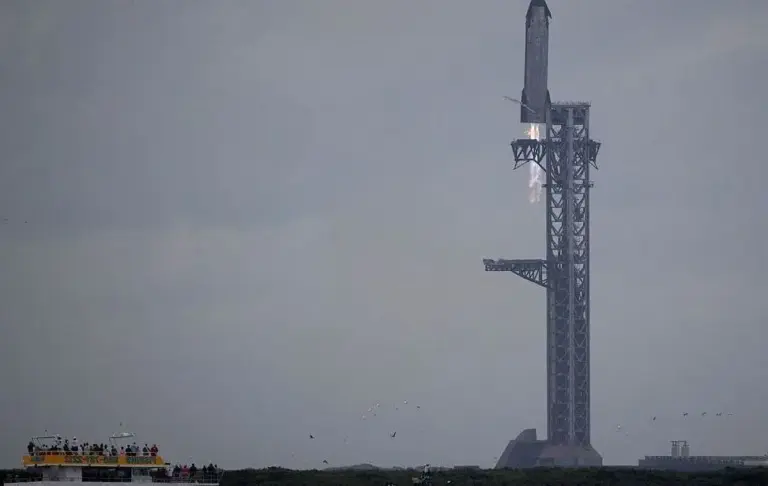
The sight was almost surreal as the black and silver vessel emerged from the clouds, plummeting toward the Texas coast. For a moment, the rocket drifted horizontally before three Raptor engines roared to life, snapping the craft into a precise vertical descent. It descended slowly and tentatively toward the launch tower, where two massive mechanical arms waited with an expectant stillness. With margins measured in inches, those metal limbs snagged the ship perfectly, securing it in a grip that looked more like magic than physics.
This breathtaking maneuver represents far more than just a viral spectacle. By successfully catching the Starship upper stage, SpaceX has cleared a monumental hurdle in its quest for rapid reusability. While the company has long been known for landing boosters on floating barges and ferrying astronauts via Crew Dragon, this latest feat operates on an entirely different scale. Capturing a vehicle of this size and energy using what essentially look like oversized chopsticks felt like stepping directly into a science fiction novel.
To appreciate the magnitude of this success, one must consider how far aerospace engineering has traveled since the era of the Space Shuttle. Back then, recovery meant fishing boosters out of salt water or guiding gliders onto runways after lengthy missions. Now, SpaceX is pursuing a vision where massive ships can return from orbit and be readied for another journey almost immediately. After orbiting the planet multiple times and returning under its own power, Starship proved that the impossible is becoming routine.
As the dust settles at Starbase, there is a lingering sense of awe among observers. This wasn’t just about solving complex equations or managing high-energy reentry; it was about daring to attempt something that seemed fantastical only a few years ago. By turning a towering piece of infrastructure into a catcher’s mitt for interplanetary vehicles, SpaceX has once again reminded the world that it isn’t just building rockets, but redefining how humanity accesses the stars.